Almost every person who runs regularly has experienced minor or major health problems. Incorrect technique when covering long distances can lead to serious injuries. The biggest risks include:
- running on heels (taking steps that are too long),
- placing the foot on the ground significantly ahead of the hips (so-called overstride),
- lifting the knees too low,
- lack of arm movement (which affects hip swaying).
Another factor contributing to injuries can be body asymmetry disorders caused by:
- differences in limb length,
- weakness in one of the limbs due to past injuries,
- degenerative joint disease.
All these risks can be prevented in advance, but identifying them on your own is practically impossible. That’s why it’s worth consulting a coach and conducting a running technique analysis in the "Conscious Runner" program. It consists of three elements:
- biomechanics assessment,
- technique assessment,
- asymmetry assessment.
These tests are performed on a treadmill, using a camera and a specialized application that analyzes the individual components of running technique.
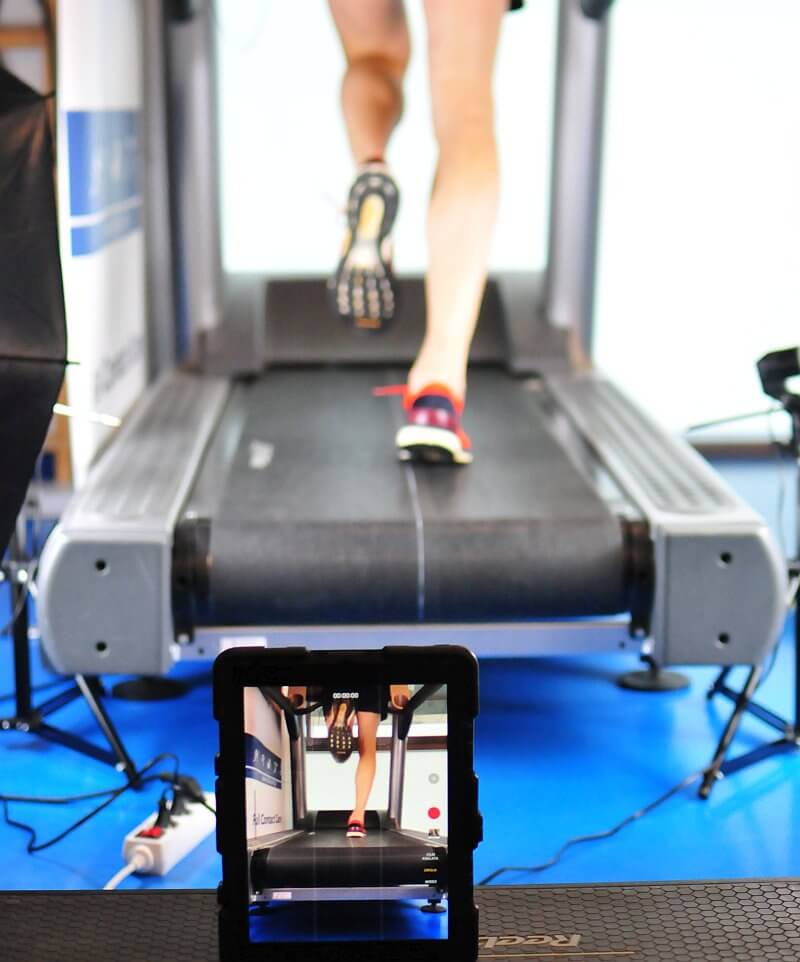
Kinematic running analysis allows minimization of the risk of running injuries. Even intermediate runners often don’t realize they are training in improper footwear that doesn’t suit their feet, leading to frustrating injuries. Injuries are also caused by improper running technique and biomechanics, and expert recommendations, based on tests, help make the necessary corrections in training.
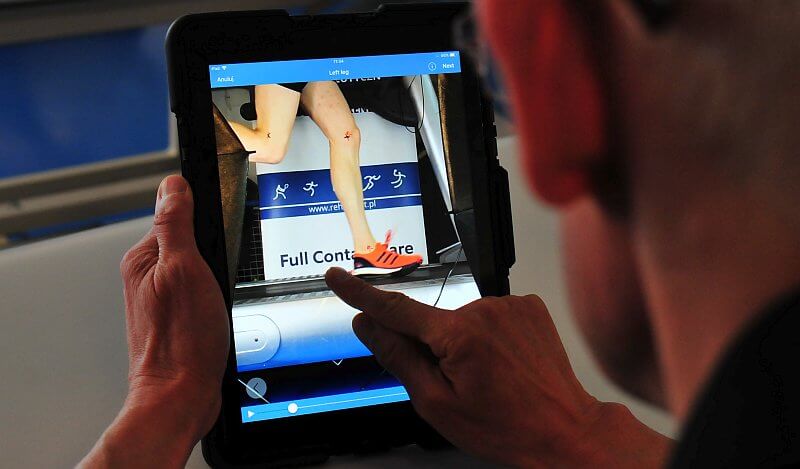
During the test, we assess the foot (the angle at which it touches the ground, whether there is pronation or supination), as well as which part and at what angle it contacts the ground. Similarly, we analyze the lower leg – the angle it forms relative to the ground upon contact. An important part of the results is the assessment of running biomechanics and checking for leg asymmetry.
The program is designed for all beginner and intermediate runners, especially those planning to start their journey in this increasingly popular sport.
 700 available appointments
 175 doctors
 1800 examinations and services
 Exclusive offers zon